Case Study: ACS & Castleford – Remote Monitoring Transformation

Spotlight on Justin and Aaron’s Experience
Introduction
In the world of municipal water management, reliability and visibility aren’t just goals—they’re essential for safeguarding communities and ensuring uninterrupted service. When systems falter, the impact can ripple across operations, maintenance, and public confidence. This case study takes you inside Castleford, Idaho’s journey to modernize its water infrastructure, highlighting how ACS partnered with the city to overcome technical challenges and deliver a solution that transforms vulnerability into resilience. Told through the perspective of the city’s Public Works Supervisor, this story illustrates the power of innovation and collaboration in meeting the evolving demands of rural water management.
Background
When ACS first engaged with Castleford, the city was working with an older SCADA system that had left operators unable to control their water infrastructure effectively. Over time, emergency repairs had been made, resulting in the system operating in an “always on” state with limited automation and inconsistent alarm functionality. To address these conditions, the council implemented a SCADA solution based on a proposal emphasizing monitoring capabilities and proprietary hardware. This configuration provided monitoring functionality but did not include full automation control. While operators had expressed a need for an integrated automation system, the initial scope focused on monitoring rather than comprehensive automation. After installation, it became clear that the system was designed primarily for monitoring purposes.
Aaron recalled, “We initially believed it was a full system, but later learned it was designed for monitoring only.” The initial implementation did not substantially improve the City’s operational challenges. However, this situation created an opportunity to develop a more comprehensive solution, which ACS helped deliver to address the City’s needs and enhance system performance.
The Challenge
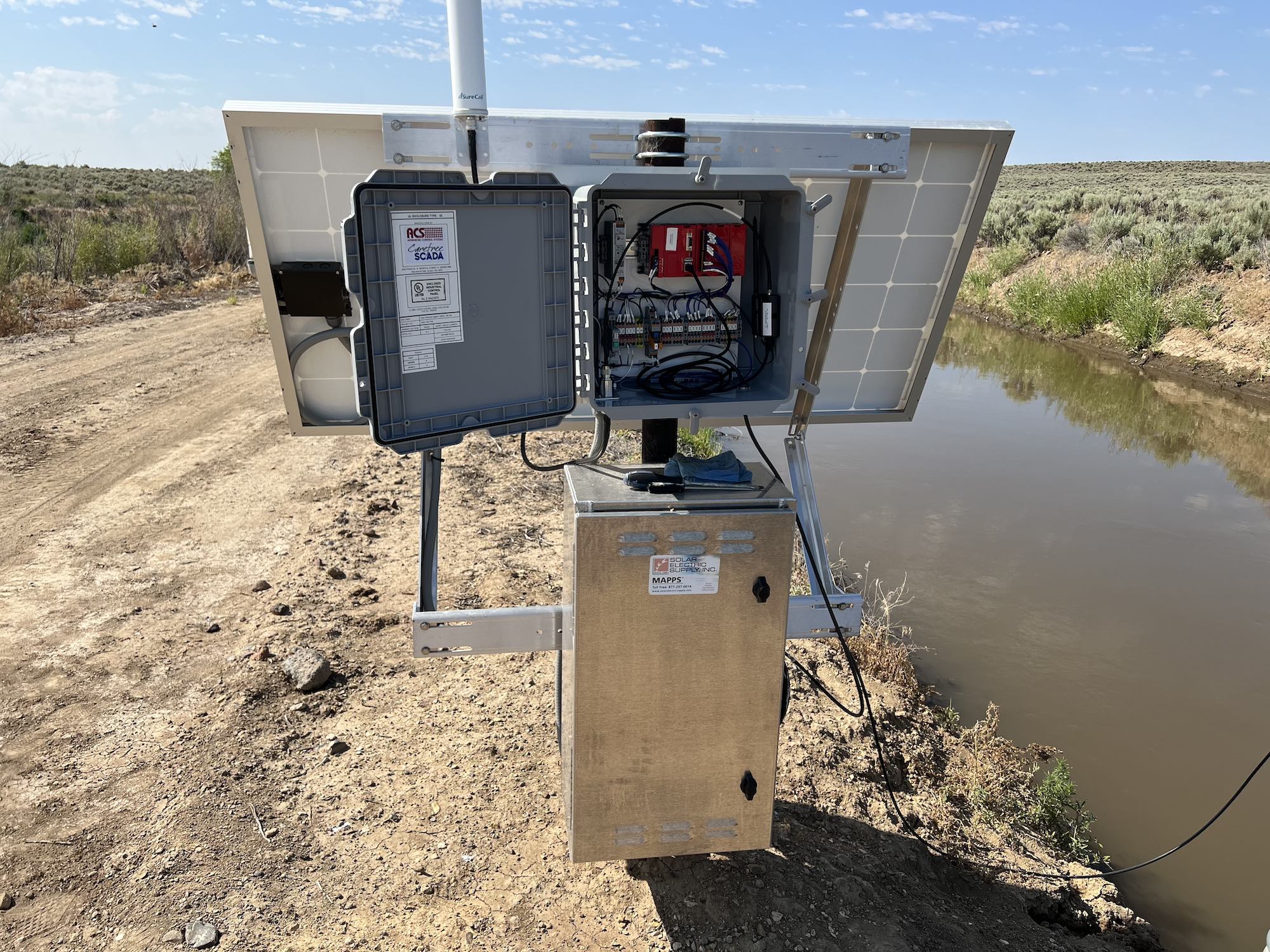
Castleford’s site required the integration of two separate PLCs (Programmable Logic Controllers) to enable seamless data communication and control. However, the initial system architecture introduced complexities, including multiple radios and separate IP addresses, which affected reliability and complicated maintenance. Additionally, the absence of technical backup for the existing monitoring system left the community vulnerable during emergencies. During the site survey, ACS discovered further challenges: tank level readings were unavailable due to faulty PLC calculations, and there was no documented code or system drawings, making troubleshooting nearly impossible. To address these issues, the ACS team identified the need for hands-on electrical troubleshooting, repairs, and detailed process documentation to ensure the new SCADA solution met project requirements and overcame previous limitations.
The ACS Solution
ACS responded with a comprehensive approach presented to the City Council, beginning with honest assessment and relationship-building efforts that revived the client’s trust. Justin jumped into an immediate deep dive of the system. He consolidated communications through a single edge node, relocated critical hardware to a climate-controlled environment for improved reliability, traced signal wires to discover past bypasses, and replaced failed hardware. To overcome the absence of documentation, Justin painstakingly extracted and reconstructed program logic from legacy SCADA and HMI systems. By implementing local internet connectivity via VPN with cellular failover, ACS ensured uninterrupted monitoring and control, while ongoing collaboration with Castleford emphasized the importance of thorough documentation and proactive support for future resilience.
Key Benefits
ACS’s solution restored real-time control and visibility to Castleford’s operators, who could now monitor and manage their water system with confidence. As a full-service integrator with expertise in engineering, PLC and SCADA programming, and electrical/mechanical systems, ACS provides end-to-end solutions without relying on additional proprietary hardware that fails to address core challenges. The city expressed a clear need for automation to simplify operations—specifically, to ensure water could be turned on automatically rather than requiring manual intervention several times a week. ACS delivered a comprehensive approach that met this need while enhancing overall system functionality. Although real-time monitoring was not the initial priority, it has since proven valuable by enabling operators to identify and resolve issues immediately, improving efficiency and reducing downtime.
Industry Adoption
Castleford’s experience underscores a common challenge in automation infrastructure: opting for lower-cost solutions often addresses immediate needs but leaves critical gaps in long-term performance. When monitoring-only systems replace full automation, operational efficiency suffers—something Castleford experienced firsthand. ACS understands these industry realities and designs solutions that go beyond basic monitoring. Our approach prioritizes direct control, system transparency, and future-ready adaptability, setting a new benchmark for rural communities seeking dependable automation partners. By delivering comprehensive functionality, ACS ensures clients achieve not just short-term fixes, but sustainable, scalable success.
Conclusion
Justin’s work on the Castleford project exemplifies ACS’s commitment to engineering excellence and customer-centric solutions. By overcoming architectural and documentation challenges, ACS delivered a system that empowers Castleford with reliable, scalable, and transparent remote monitoring—setting a benchmark for future projects. This success story demonstrates how thoughtful design and proactive problem-solving can transform operational vulnerabilities into long-term stability. For Castleford, the result wasn’t just a technical upgrade—it was peace of mind, knowing their water system is supported by a partner who values responsiveness and integrity.
As rural communities continue to modernize their infrastructure, ACS stands ready to provide solutions that combine innovation with trust, ensuring every client feels confident in their control systems today and for years to come. The Castleford project demonstrates ACS’s commitment to engineering excellence and customer advocacy.
About the Author:
Laura Frank is a dedicated mother of three who treasures family above all else. When she isn’t with loved ones, you’ll find her baking, spending time outdoors, or relaxing with her dogs. Her husband, Jonathan, is her steady anchor and greatest support.
Laura joined ACS in late 2024 as an Assistant Account Manager, where she supported customer relationships and sales operations. Recently, she was promoted to Marketing Coordinator, recognized for her customer service skills that raised the standard for client experience. In this role, Laura is committed to ACS’s values of quality, innovation, and doing what’s right, helping the team show up R.E.A.L. while making every interaction simpler, warmer, and more effective for customers.
Beyond her day-to-day responsibilities, Laura feels a passion to help others find strength and empowerment, no matter their circumstances. She credits the kindness and support she received during her own difficult times as the foundation for this calling. With gratitude at the heart of everything she does, Laura approaches service quietly and sincerely—believing that even the smallest acts of compassion can create meaningful change. For Laura, the service is simple: listen with care, act with compassion, and leave people feeling a little more confident than before.
Grounded, thankful, and community-minded, Laura believes small acts of kindness can open big doors—and she’s grateful for every chance to pay forward for the support she’s been given.